


Synthetic Embryos Without Sperm or Egg: Are We Rewriting the Origin of Life?
In a stunning leap for biology, scientists are creating synthetic embryos without using sperm, eggs, or wombs. Here's what this means for science, ethics, and the very idea of reproduction.
By The Duskbloom Media Team
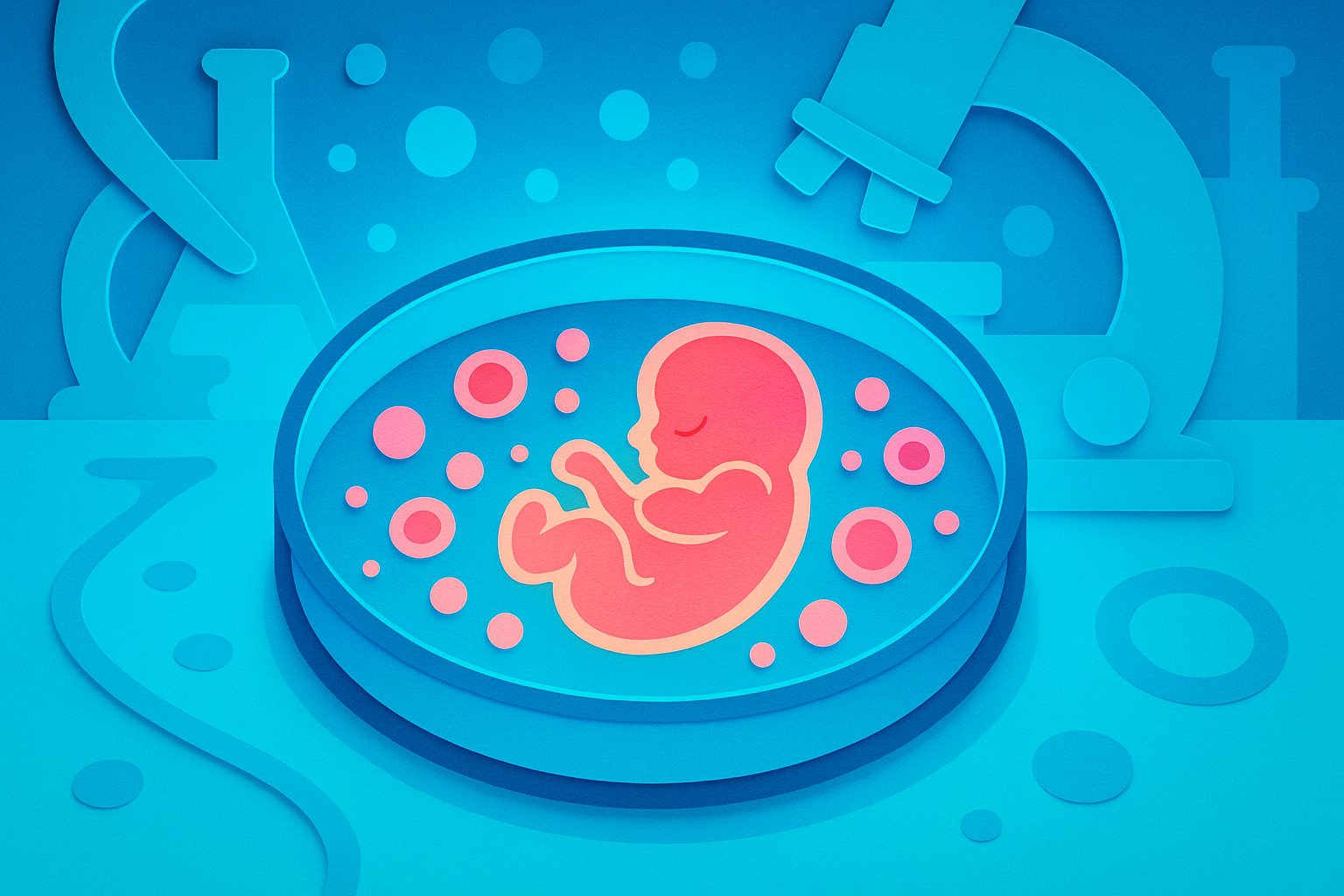
Image via Duskbloom Discovery
A team of researchers recently did something that sounds like science fiction. They created synthetic human embryo-like structures without using sperm, eggs, or even a womb.
Let that sink in.
Using only stem cells, scientists assembled early-stage embryo models that mimic the structures formed in the first weeks of development—including features like the primitive gut and even hints of a developing brain. And these weren’t obscure cells in a petri dish. These were organized, complex, and eerily familiar forms.
So, are we on the brink of manufacturing life? Are we stepping into a post-reproductive future? Let’s dig into what’s happening, why it matters, and what this means for science and society.
What Did Scientists Actually Create?
First, a clarification: These aren’t full embryos.
What was created were embryo-like structures, also known as synthetic embryo models or embryoids. Using pluripotent stem cells—cells that can turn into any type of tissue—researchers from institutions including the University of Cambridge and the Weizmann Institute of Science were able to mimic stages of early human development, up to around day 14.
Crucially, this is the same point where the so-called "primitive streak" forms—a structure that marks the beginning of the body’s organization.
That’s important, because many scientific and ethical guidelines, including the 14-day rule, prohibit researchers from developing human embryos past this point.
Why Create Synthetic Embryos?
The main goal isn’t reproductive. Not yet, anyway.
Instead, these models allow scientists to study:
- Early pregnancy loss and implantation failures
- Congenital disorders and gene regulation
- How organs begin to self-organize
Real embryos are hard to study—especially in the earliest days. With synthetic models, researchers can finally observe the biological drama of life’s beginning in real-time, under microscopes, and with unprecedented control.
In theory, this could accelerate IVF success rates, prevent miscarriage, and even offer safer gene-editing techniques.
A Shortcut to Artificial Wombs?
Here’s where things get murky.
If scientists can grow increasingly complete embryo-like structures from stem cells, and artificial womb technology continues to advance (like the biobags tested with premature lambs), are we inching toward a future where human reproduction could happen entirely outside the body?
There are no approved human trials yet, but in 2022, researchers in Israel grew mouse embryo models with a beating heart and blood circulation without fertilization or a uterus. That’s a big step toward so-called ex utero embryogenesis.
It raises a stunning possibility: a fertilization-free reproduction system. This isn’t about designer babies or cloning—yet. It’s about reconstructing the architecture of life from scratch.
What About the Ethics?
Here’s the deal: ethics hasn’t caught up.
Right now, most countries regulate research on embryos. But synthetic embryos? They occupy a gray zone. They’re not legally defined as embryos in most jurisdictions. They have no parents. They weren’t fertilized. But they still resemble human life in its earliest form.
Some scientists are calling for a new term: “embryo models” instead of synthetic embryos, to reinforce that they’re not viable and not equivalent to true embryos.
Still, there’s concern. Could they eventually be implanted? Should they be? What rights, if any, would they have?
And who decides the rules when no fertilization has occurred?
Are We Playing God—Or Just Reading the Blueprint?
One way to look at this is through a technological lens. Just as CRISPR gave us the ability to rewrite genes, these synthetic embryos may let us reverse-engineer development.
If nature provides the blueprint, scientists are now learning how to read—and rebuild—it.
And as with all powerful tools, the outcomes depend on intent, regulation, and oversight.
In the right hands, synthetic embryo research could reduce suffering, eliminate genetic disorders, and demystify the earliest stages of human life.
But without consensus, oversight, and clear ethical guidelines, we risk crossing lines we never meant to approach.
A Turning Point in Biology
Synthetic embryos aren't a gimmick. They’re a turning point—a new lens on life’s earliest, most mysterious phase.
As the science advances, society will need to grapple with a question we’ve never truly faced:
What is the moral status of something that looks like life but wasn’t born of it?
Want to learn more? Read this summary of the latest research from Nature and follow ongoing ethical debates through the Nuffield Council on Bioethics.
Coming up next: Why Earth’s Magnetic Field Might Be About to Flip (And What That Actually Means).
Ad Placeholder
Article Inline Ad
Billboard
More from Science

Why Earth’s Magnetic Field Might Be About to Flip (And What That Actually Means)
By The Duskbloom Media Team
The Brain’s Hidden Clock: How Time Cells May Reshape Our Understanding of Memory
By The Duskbloom Media Team
What Voyager 1 Just Pulled Off at 15 Billion Miles Away
By The Duskbloom Media Team