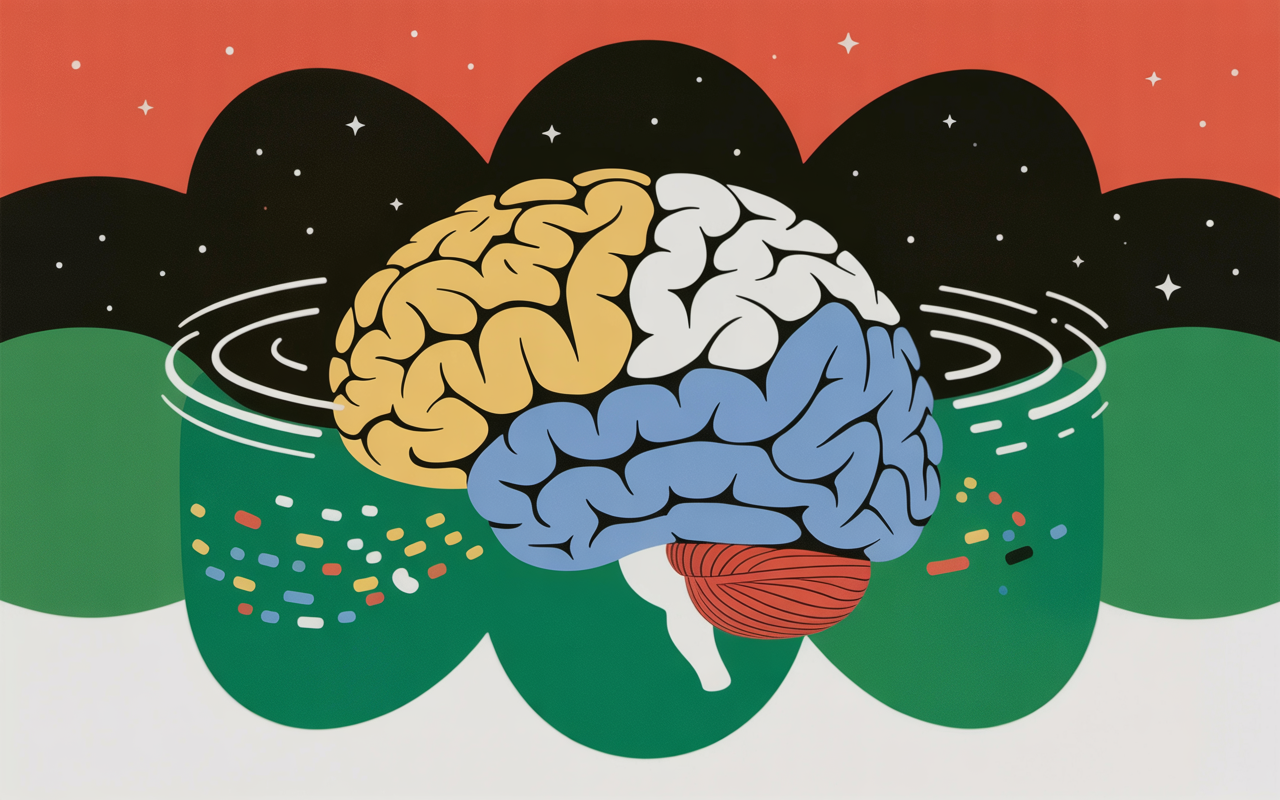


Why Humans Are Still Better Than AI at Forecasting the Futures
Despite rapid advances in AI technology, humans still possess unique cognitive abilities that make them superior forecasters.
By The Duskbloom Media Team

Image via Duskbloom Discovery
Artificial Intelligence has made remarkable progress in recent years, mastering games like chess and Go, generating realistic images, and even writing articles. However, when it comes to predicting complex future events, humans still maintain a decisive edge. This article explores why human forecasters continue to outperform their AI counterparts in anticipating the future.
The Human Advantage in Forecasting
While AI excels at pattern recognition within existing data, humans possess several unique cognitive abilities that give them an advantage in forecasting:
1. Contextual Understanding
Humans have a rich, multidimensional understanding of the world built through lived experience. This contextual knowledge allows human forecasters to:
- Recognize when historical patterns may not apply to new situations
- Understand nuanced social, political, and cultural factors that influence outcomes
- Apply "common sense" reasoning that remains challenging for AI systems
- Identify when previously unrelated domains might suddenly interact in important ways
For example, when forecasting economic trends, humans can instinctively understand how a political event might affect consumer confidence in ways that don't appear in historical data.
2. Adaptability to Novel Situations
The real world constantly presents unprecedented scenarios. Humans excel at:
- Applying reasoning by analogy to novel situations
- Recognizing when a situation requires entirely new thinking
- Quickly incorporating new information that might invalidate previous assumptions
- Adjusting mental models on the fly
During the early days of the COVID-19 pandemic, human forecasters quickly adapted their models based on early data from different countries, while many AI systems struggled to make accurate predictions without extensive pandemic-specific training data.
3. Causal Understanding vs. Correlation
AI systems often rely on identifying correlations in data, while humans excel at:
- Distinguishing between correlation and causation
- Understanding complex causal relationships
- Identifying potential causal mechanisms that haven't been observed yet
- Reasoning counterfactually about what might have happened under different conditions
This causal understanding allows humans to make better predictions about how interventions will affect outcomes, especially in domains with limited historical data.
4. Integration of Diverse Information Types
Humans can seamlessly integrate:
- Quantitative data and statistics
- Qualitative insights and anecdotes
- Expert opinions and crowd wisdom
- Intuition and emotional signals
This integration allows human forecasters to identify early warning signals that might be missed by purely data-driven approaches.
How AI and Humans Can Work Together
Rather than competing, the most promising approach combines human and AI strengths:
- AI excels at processing vast amounts of data and identifying patterns
- Humans excel at providing context, causality, and judgment
- AI can reduce human cognitive biases by highlighting counterevidence
- Humans can guide AI toward relevant variables and away from spurious correlations
The best forecasting systems today use this hybrid approach, with AI augmenting human judgment rather than replacing it.
The Future of Forecasting
As AI capabilities continue to advance, the gap between human and machine forecasting will likely narrow, but human judgment will remain valuable for:
- Novel, unprecedented events
- Complex socio-political situations
- Long-term forecasting where data is limited
- Situations requiring moral or ethical considerations
By understanding the complementary strengths of human and artificial intelligence, we can develop more robust forecasting systems that leverage the best of both approaches.
Conclusion
Despite impressive advances in AI, human forecasters still possess unique advantages in predicting complex future events. The most effective approach combines human contextual understanding, causal reasoning, and judgment with AI's ability to process vast amounts of data. As we look to the future, this collaborative approach will likely yield the most accurate forecasts for our most challenging prediction problems.
Relevant tags:
Ad Placeholder
Article Inline Ad
Billboard